
Takeaways From the Africa Bitcoin Conference 2025
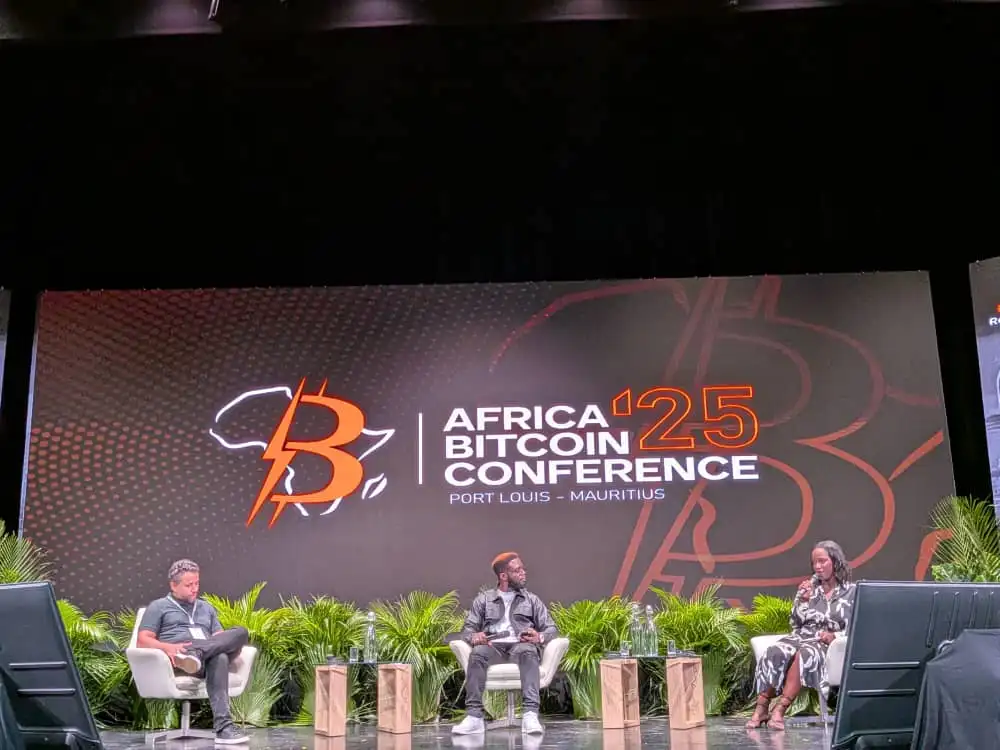
The fourth edition of the Africa Bitcoin Conference (ABC) concluded in Port Louis, Mauritius, under the stewardship of Farida Nabourema, the outgoing executive director and human-rights advocate.
Previously hosted in Accra and Nairobi, the 2025 edition brought the community together to interrogate Bitcoin as a transformative tool for African agency.
The conference was well curated, rich with belief in Bitcoin’s potential to reshape African economic realities and marked by the introduction of new initiatives and voices, including the Africa Bitcoin Institute (ABI).
The programme was rich with optimism and technical progress. B-trust outlined its expansive developer-support pipeline, while Gridless presented low-cost mining technology designed to reduce barriers to participation.
Fedi’s launch of Sate-lite, offering satellite internet access to remote communities, signaled a more serious engagement with Africa’s structural infrastructure constraints.
Perhaps the most resonant interventions came from Femi Longe, who urged the community to “build factories, not churches.” His message was a clear call to resist ideological comfort and instead focus on creating practical pathways for Africans to earn, spend, and trade Bitcoin among ourselves.
Real agency, he argued, demands creativity and sustained delivery.
(Credit: Afrobitcoin.org)
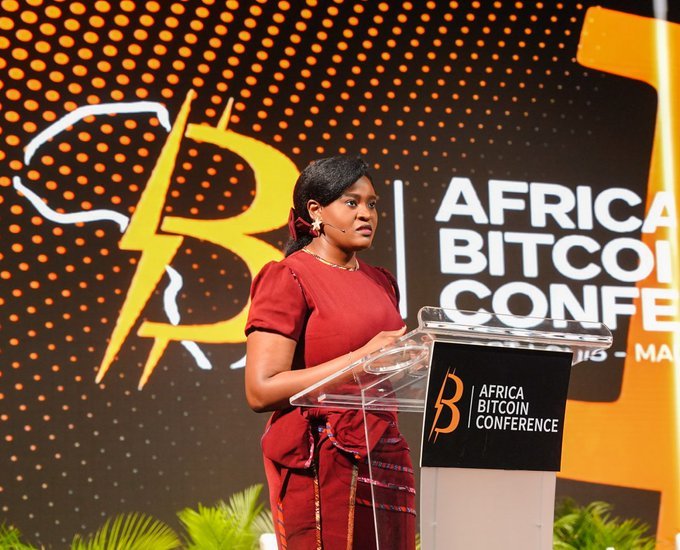 Dr Farida during the Africa Bitcoin Conference 2025
Yet amid this progress, structural gaps became clear. Development is advancing without a collective framework, and there is a growing risk of “NGO-fying” the ecosystem in ways that undermine dignity.
Communities are growing and tools are emerging, but without coordination there is a risk that outcomes ultimately benefit external interests more than local ones.
As Farida warned, “If we, the Bitcoiners of Africa, can’t show the need of Bitcoin, then we have failed.”
Narrative control is part of that challenge. Dr Nabila cautioned that if African founders do not master telling their own stories, they will be written by others.
This is where ABI positions itself differently. The institute aims to anchor the ecosystem in empirical data — tracking real-world Bitcoin use across African markets, measuring adoption, access, and trade frictions, and producing evidence-backed insights to guide builders, investors, community leaders, and policymakers.
By grounding experimentation in measurable outcomes, ABI seeks to align disparate efforts around what demonstrably works.
With 54 countries and 42 currencies, intra-African trade remains stalled at 15–16%. Fragmented borders and broken payment rails continue to constrain small businesses and regional commerce.
This is precisely the structural problem Bitcoin can challenge — a settlement rail that demands no political ratification and bypasses the bureaucratic inertia that has slowed implementation within the African Union.
The future for Bitcoin in Africa is clearer, more coordinated, and backed by undeniable proof-of-work. With a shared agenda and steady execution, Africa is well-positioned to turn potential into lasting impact.